Auto Amazon Links: No products found.
Abdullah, an asylum seeker from Sudan, shields his eyes against the bright midday sun as he looks out over the lush greenery of Tŷ Mawr country park in north Wales. Nestled along the River Dee in the Vale of Llangollen, the park is part of a designated area of outstanding natural beauty. The pastoral scene is dotted with sheep, goats, pigs, and chickens, providing a peaceful backdrop far removed from the stresses of immigration bureaucracy. “This place is so beautiful,” Abdullah reflects. “It feels a very long way from the Home Office.”
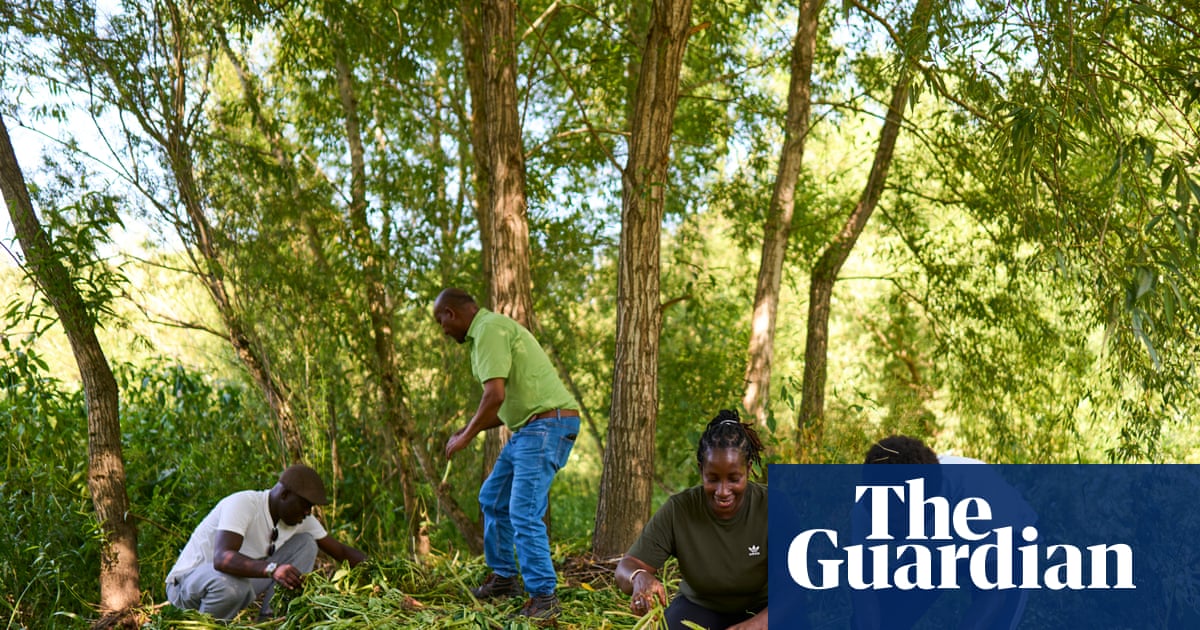
Abdullah is among a group comprised of asylum seekers, refugees, and environmental volunteers who have come together to remove invasive Himalayan balsam plants from the riverbanks. Despite temperatures nearing 30°C, they wear gardening gloves and diligently pull up the spreading weeds before most return to their asylum accommodations in Liverpool later in the day. This activity is one element in a series of quarterly climate action events organized through a partnership of charities, including Action Asylum, Asylum Link Merseyside, the North Wales Wildlife Trust, and the Dee Trust.
The collaboration between refugee support and environmental conservation groups is rare but effective. Since 2020, Action Asylum, delivered nationally by the Task Force Trust, has been successfully uniting people seeking asylum with local communities via environmental volunteering initiatives. This approach fosters community cohesion amid growing hostility towards refugees and simultaneously benefits the environment through activities such as tree planting, habitat restoration, and beach clean-ups. Recently, Action Asylum secured £1.62 million in funding from the National Lottery’s climate action fund, allowing for expansion into new cities like Sheffield, Newcastle, and Bolton while continuing work in places such as Leeds, Stockton-on-Tees, and Portsmouth. Over the next three years, the program aims to engage over 3,000 volunteers and deliver 120 major climate events across England and Wales.
Jane, a refugee and one of the program’s lead ambassadors, emphasizes the deeper significance of these efforts: “When you plant a tree, it does not matter who you are or where you came from. Your hands are in the soil, and you belong to the planet as a human being. We don’t just plant trees. We plant belonging, and we plant purpose.” Emma Leaper, project director at Action Asylum, explains that the new funding will enable the project to scale up proven methods of bringing people together in nature. “For people seeking asylum, who often face many barriers to inclusion, being part of nature recovery and climate resilience isn’t just about volunteering. We’ve seen firsthand how working alongside others in nature can transform someone’s confidence and sense of self.” Jane adds, “Planting trees is healing for me and healing for the land. It leaves a good footprint.”
Ethiopian volunteer Solomon shares his motivation for helping remove Himalayan balsam: “I want to work with the soil to protect our environment.” Alongside him, Gemma Rose from the North Wales Wildlife Trust supports the volunteers with guidance as they clear the invasive plant from the riverbanks. Reflecting on the experience, Gemma notes, “So many of the asylum seekers spend most of their time in hotels. It’s great for them to come and help out at a place like this. I feel lucky to be involved with this project. It gives you a much better view of the world.”
In addition to removing invasive species, the volunteers also cultivate vegetables such as onions, potatoes, garlic, and courgettes. For Abdullah, engaging in gardening is a poignant reminder of his life before displacement. “I lived in a village in Darfur,” he recounts. “I loved the life in my village and used to plant things like onions and garlic there. My mother grew mangoes and lemons and chillies, which she sold in the market. But the life was difficult because of the war and everybody ran to different countries.” While far from home, planting crops reconnects him to memories of Sudan and a life interrupted by conflict. “Planting things here reminds me of my country before we had to escape.”
Read the full article from The Guardian here: Read More
Auto Amazon Links: No products found.