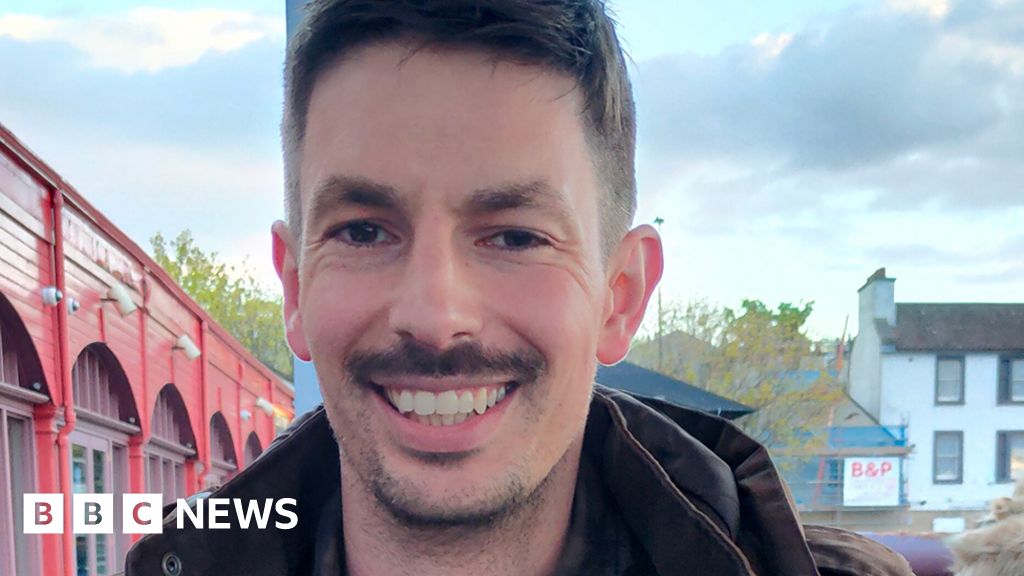
John Jennings and his sister Emily watched their mother Carol suffer from early-onset Alzheimer’s disease from the age of 50, and knew they had a 50:50 chance of inheriting the faulty gene. However, a letter Carol wrote to a team at University College London, who were researching Alzheimer’s, containing genetic information about her family history, helped identify the gene links to many members of the family. John’s personal coping mechanisms involve resilience and positivity, as well as attending regular support groups and taking part in Alzheimer’s research. Although John knows the risk of developing Alzheimer’s is higher for him, he feels we are “on the cusp” of discovering treatments to help stop the disease in its tracks.
John Jennings’ mother, Carol, wrote to a team researching Alzheimer’s disease at University College London (UCL) in 1986 after noticing the condition’s link to her family history. Carol’s father and his four siblings were all diagnosed in their fifties, which convinced Carol there was a genetic component to the disease. UCL researchers analysed the genetics of Carol’s family, identifying a gene in 1991 that all affected members shared. The mutation to the amyloid precursor protein (APP) gene results in the accumulation of amyloid protein in the brain, leading to the formation of plaques and the death of brain cells.
Inherited Alzheimer’s disease is a rare form of the condition, with an incidence of less than 1% of all Alzheimer’s cases, according to Alzheimer’s Research UK. Nevertheless, for people at risk of genetic Alzheimer’s, a blood test can be taken once they have consulted with a specialist and undergone counselling. John, who is now 39, does not know if he has inherited the faulty gene, but if he has, he will develop Alzheimer’s disease in his early fifties, like his mother before him. The experience has made him focus on reducing stress and keeping up family relationships over material goods.
Although some treatments for Alzheimer’s are being developed, they are yet to be tested extensively. John is optimistic and hopeful he will live long enough to see a cure or a successful treatment, especially as the disease has taken his mother. Despite the risk, John continues to stay upbeat and positive, supporting his sister and working towards advancing Alzheimer’s research
Read the full article from The BBC here: Read More